
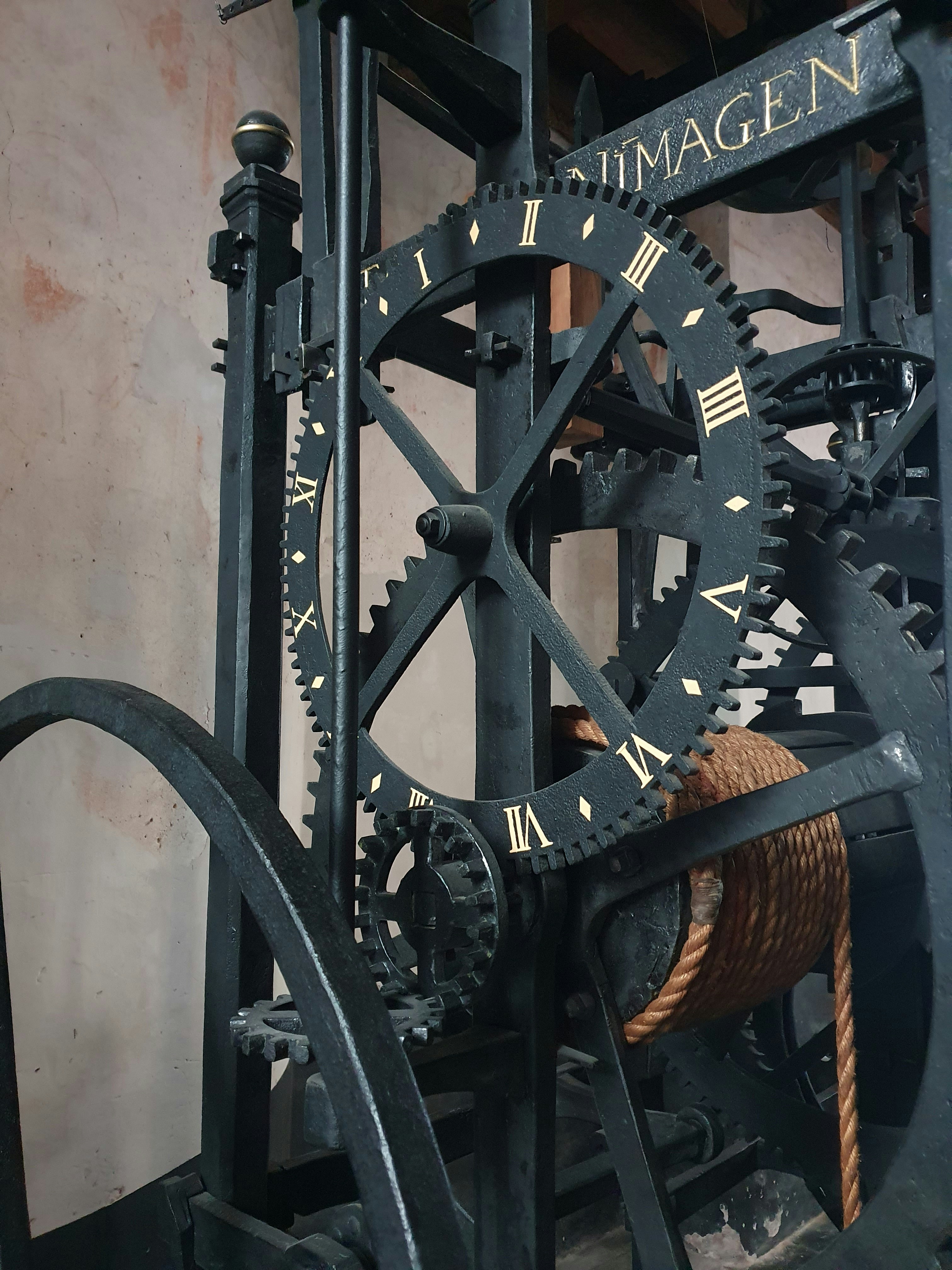
The Artisan of Time
In a quaint town nestled between rolling hills and whispering streams, the skilled clockmaker, Elias, dedicated his life to the art of timekeeping. With nimble fingers and a discerning eye, he meticulously crafted intricate timepieces that were revered not only for their beauty but also for their unparalleled precision. Each clock was a manifestation of his passion, embedding his soul into the very mechanics that ticked in tandem with the rhythm of life around them.
Elias was not merely a craftsman; he was an artisan whose understanding of time transcended the confines of gears and pendulums. His workshop, adorned with various clocks of all shapes and sizes, buzzed with the musical chimes of each hour. Local townsfolk would often visit, not just to purchase a finely crafted clock, but to witness the mesmerizing process of creation. It was a spectacle, as Elias orchestrated the movement of springs and weights with an almost poetic grace, bringing each timepiece to life.
In Elias’s eyes, every craftsmanship project was a pact with time itself, a delicate balance of artistry and mechanics. His passion for his work instilled a profound respect for the temporal nature of existence, shaping not only his identity but also influencing the lives of those who appreciated the depth of his creations. As the townspeople would gather to hear the stories behind each masterfully crafted clock, one sentiment lingered: the understanding that time, when measured through artistry, is indeed a priceless gift.
The Mysterious Creation
The creation of the exquisite clock at the heart of our narrative is steeped in both technical marvel and emotional depth. Crafted by the protagonist, Elias, this intricate timepiece was not merely a mechanical product but a reflection of his intense introspection and yearning for control over the uncontrollable elements of life. Each gear and spring was meticulously selected and assembled, embodying his desire to manipulate time itself—a futile endeavor, yet an undeniably compelling one.
This unique clock distinguished itself from ordinary timepieces through its remarkable mechanism that allows it to reverse time by a mere 30 seconds. The complexity of hydraulics and fine engineering techniques involved in its creation underscores a profound understanding of both time and technology. As Elias worked, the clock became imbued with not only his craftsmanship but also his emotional struggles and desires. It was during these moments of solitude in his workshop that Elias began to channel his frustrations and regrets into a tangible object, leading to the clock’s mysterious origin.
Designed with elegant carvings and a shimmering face, the clock serves as a metaphor for Elias’s internal conflict—the desire to dwell in the past while grappling with the inevitability of the future. Each tick represents not just the passage of time but a reminder of the sacrifices he has made to bring this extraordinary creation to life. As the narrative unfolds, this magnificent clock emerges as a pivotal element, symbolizing both hope and the burden of choice, ultimately shaping the journey ahead for Elias and those around him.
An Unexpected Visitor
One overcast afternoon, amidst the rhythmic ticking of countless clocks in his workshop, Elias found his mundane existence disrupted by the sudden arrival of a mysterious woman. Her entrance was almost ethereal; Seraphina seemed to glide across the threshold, her presence instantly commanding his attention. Dressed in a flowing gown that fluctuated between hues of twilight and dawn, she bore an enigmatic aura that was difficult to decipher. The light through the window accentuated the sharp angles of her face, casting shadows that seemed to flicker with the passing seconds, further amplifying the weight of her unspoken story.
As they stood together, the air thickened with an unspoken tension that made Elias acutely aware of the gravity of the moment. Seraphina’s emerald eyes, brimming with an urgency he could not yet comprehend, locked onto his own. “I need your help,” she implored, her voice a blend of desperation and resolve. “There is an impending threat, one that time cannot allow me to escape.” The words hung in the air, punctuated only by the soft ticking of the myriad clocks surrounding them, each one a reminder of the relentless passage of time.
Elias, a man accustomed to measuring moments meticulously, found himself grappling with conflicting emotions. As a skilled timekeeper, he was endowed with a unique power; however, the implications of that power weighed heavily on his conscience. Seraphina’s plight resonated with him deeply, stirring a moral turmoil within. Could he truly intervene in the fabric of time to avert her fate? What sacrifices would be required, and at what cost? This interaction marked a pivotal moment in Elias’s life, as he stood at the crossroads of duty and conscience, pondering the true essence of his craft—a craft that could reshape destinies.
The Temptation of Time
Elias stood at the precipice of profound choice, his clock ticking softly, urging him to consider its remarkable power. The ability to adjust reality by mere seconds was an intoxicating prospect, one that toyed with the very fabric of fate. Each tick of the clock resonated with an echo of temptation, presenting a dazzling array of possibilities, yet accompanied by a weighty moral burden. The thought of altering simple moments—30 seconds here, a minute there—bore the promise of reshaping lives, rekindling lost opportunities, and even avoiding tragic outcomes.
However, Elias was acutely aware of the precarious balance of time. These moments, fleeting in their nature, were not merely units to be manipulated but integral components of life’s intricate tapestry. Could he justify bending the course of destiny for the sake of his desires? The clock, an exquisite artifact, became a symbol of both hope and despair. Each manipulation risked an unforeseen cascade of repercussions that could disrupt not only his life but the lives of countless others.
The moral quandaries surrounding time manipulation weighed heavily on Elias’s conscience. What would he sacrifice to exploit this gift? As the seconds danced before him, visions of alternate realities flooded his mind—scenes where love was rekindled or where failures vanished like mists at dawn. Yet, with every imagined scenario, a troubling realization gnawed at the edges of his thoughts: interference with the natural order of things could usher in chaos, tearing apart the very moments that gave life its meaning.
Ultimately, Elias found himself watching the hands of his clock inch forward, caught in a dilemma where desire collided with integrity. With every second that passed, the temptation of time loomed larger, yet he remained acutely aware that each choice bore profound significance. The question lingered—could he risk the stillness of existence for the flickering shadows of desire?
The First Trial
With the weight of responsibility heavy on his shoulders, Elias stood before the enigmatic clock, his heart racing with the pulse of imminent danger. When Seraphina’s life was at stake, the sanctity of time became a mere backdrop to his frantic thoughts. He contemplated the potential consequences of rewinding time, a power that could alter the fabric of reality itself. Each tick echoed ominously in the silence of the room, reminding him that every second mattered.
Driven by a blend of anxiety and determination, Elias activated the clock, feeling its ancient mechanisms hum to life under his touch. As the seconds began to rewind, he experienced a disorienting sensation, as though the universe itself were reshuffling its cards. The air thickened with tension as memories blurred and unfolded like pages from a forgotten book. He could see the moments leading up to Seraphina’s peril—the choices made, the paths taken—as if they were projections in a shimmering haze.
Suddenly confronted with Seraphina just before the moment of tragedy, Elias seized the chance to intervene. His heart raced as he spoke words of caution that had not been uttered in the original timeline. Yet, as the danger dissipated, unease crept into his mind. Had he truly saved her, or simply postponed fate’s inevitable grasp? This experience caused him to question the morality of his actions. Was it right for him to play the role of a puppet master, manipulating time to serve his desires?
The outcome of his first trial left Elias grappling with the nature of fate and destiny, igniting a flame of doubt within. Each second he toyed with held the potential for both salvation and chaos. As he pondered the complexities of time and free will, he realized that the clock was not merely a tool but a reflection of the profound relationship between choice and consequence. The implications of his actions echoed within him, reverberating through the very essence of time itself.
Unforeseen Consequences
The delicate nature of time is often taken for granted, yet Elias’s experience with the ancient clock serves as a stark reminder of its fragility. Initially, he believed that a minor adjustment here or there would yield trivial results. However, he soon discovered that even the slightest alteration could initiate a domino effect, leading to unintended consequences that rippled through the timelines of those around him. This realization was not immediate; it unfolded gradually as Elias began to notice the fluctuations in the lives of his friends and family.
For instance, he once decided to rewind just a few minutes to prevent a trivial argument between two acquaintances. What he presumed would restore harmony instead resulted in a series of events that escalated tensions in their relationship, ultimately leading to a permanent fallout. This chain reaction illuminated a profound truth: time is intricately interwoven, and every instantaneous decision carries the potential for significant repercussions. The relationships he sought to mend became tainted by his interference, each moment adjusted leading to a fate far diverging from its original path.
As Elias navigated his capacity to manipulate time, he was forced to confront the ethical dilemmas that accompanied such power. The more he intervened, the more chaotic the outcomes. He began to witness unexpected joys juxtaposed with sorrow, accentuating how deeply interconnected their lives were. It became painfully clear that he was not just altering the present; he was also reshaping the futures of others in ways he could not entirely predict.
This awakening sparked a profound internal conflict within Elias, as he grappled with the cost of his gift. The freedom to control time came at a steep price, shrouding his intentions with doubt and elevating the stakes considerably. With every tick of the clock, he pondered whether his next move would rebuild the lives he cherished or irrevocably shatter them.
A Darker Threat
As Elias delves deeper into the enigma surrounding Seraphina, he begins to uncover unsettling truths that challenge his understanding of their predicament. Initially perceiving the threats to Seraphina as mere external adversaries, the clockmaker soon realizes that a more sinister power lies in wait. This darker force, shrouded in mystery, not only targets Seraphina but also extends its reach to Elias himself, intertwining their fates in a web of danger and despair.
In the quiet corners of his workshop, a sense of foreboding starts to creep in, disrupting the rhythmic ticking of the clocks that once provided him comfort. Each chime now resonates with an urgency that speaks of impending doom. The delicate balance between time and consequence begins to fracture, revealing the darker elements that threaten to obliterate the fragile connection he shares with Seraphina. Elias, initially blinded by his aspirations and the allure of his creations, now faces the stark reality that his craft may have awakened forces beyond his control.
Fear grips Elias like a vice; he understands that they are not only up against tangible adversaries but are also battling an ancient malevolence rooted in time itself. Whispers of dark intentions echo through the fabric of reality, suggesting that the clockmaker’s talent for bending time may have stirred something that should have remained undisturbed. As Elias navigates the intricate dynamics of trust and responsibility, he becomes painfully aware that premature success might come at a high cost, potentially severing the timekeeper’s gift from the very essence of their existence.
This revelation ignites a desperate urgency within Elias. He realizes that in their quest for survival, they must not only confront the shadows that lurk externally but also combat the internal doubts and fears that threaten to engulf them both. Time, once a mere tool in his hands, transforms into an adversary in its own right, compelling Elias to protect Seraphina at all costs while grappling with the daunting realization that the greatest threat may lie closer than he ever imagined.
The Battle for Fate
As Elias and Seraphina ventured deeper into the heart of the shadows that threatened their existence, they discovered that their intertwined destinies demanded more than mere coincidence. The pull of fate guided their steps, yet the weight of it bore heavily on their shoulders. Faced with the menacing dark force, they realized the necessity of a strategic alliance forged through trust, for their survival hinged on it.
The complexities of their budding relationship began to emerge, layered with unspoken words and hidden fears. Elias, once a solitary figure lost in time, found in Seraphina a kindred spirit, possessing an unwavering courage that compelled him to confront his demons. Seraphina, on her part, recognized the fragility of their situation; her past had taught her that trust could be a double-edged sword. Yet, there was an undeniable spark that urged them to confide in one another, creating a bond rooted in mutual respect and understanding.
As their dynamic evolved, the themes of sacrifice took center stage. Elias understood that to protect Seraphina, he might need to relinquish parts of himself—his time, his memories, and perhaps, his very essence. Similarly, Seraphina was confronted with choices that could either preserve their lives or seal their fates forever. Such moments of sacrifice emphasized the profound connection they shared, transforming mere survival into a mission fueled by love and loyalty.
This fundamental shift shaped their approach to the dark force, morphing confrontation into collaboration. Together, they crafted strategies to outsmart their adversary, blending Seraphina’s ingenuity with Elias’ innate ability to manipulate time. They became more than just allies; they were two souls intertwined in a struggle where every second counted. As their journey unfolded, it became evident that their fates were irrevocably linked, each sacrifice bringing them closer to the ultimate resolution of their shared battle.
The Final Decision
The tension in the air was palpable as Elias stood at the precipice of fate, his heart racing in response to the weight of the moment. Before him lay two paths, each fraught with consequences that could reverberate through the very fabric of time. On one side, the pleading eyes of Seraphina shimmered with hope, representing a future filled with possibility and shared dreams. On the other, the irreversible passage of time beckoned him to accept the inevitability of fate, pressing him to reconsider the significance of sacrifice.
Elias had always viewed time as a relentless river, flowing forward without regard for one’s desires or decisions. However, this critical juncture revealed the intricate interplay between time and the choices that defined a person’s existence. In weighing the two options, he considered the sacrifices he had made—each moment spent in pursuit of Seraphina, each decision that had led him here. The realization struck him that every heartbeat held the potential for change, for building or dismantling the narrative of his life. To choose to save Seraphina would mean risking his own life, delving into the unknown in hopes of preserving the beauty they shared.
The dilemma crystallized in his mind: could he truly alter the course of fate? The sacrifices he faced were not just his own; they rippled outward, impacting those who cherished them both. Elias felt the profound weight of interconnectedness, where every choice bore the potential to uplift or condemn. His past choices loomed large, and with each breath, he pondered the nature of sacrifice—whether he could bear the burden of losing Seraphina, or if saving her would ignite a spark of hope in a world otherwise consumed by despair. As he took a deep breath, the pivotal decision awaited his answer, promising to reshape the trajectory of their intertwined destinies.
Reflections on Time and Fate
The narrative of Elias and Seraphina compels us to ponder the intricate relationship between time and fate. Throughout their journey, Elias, as a skilled clockmaker, grapples with the concept that time is not merely a commodity to be measured but a profound element that shapes our lives, emotions, and destinies. Each tick of the clock serves as a reminder of fleeting moments, urging us to recognize the weight of our choices and their potential impact on the future.
As Elias interacts with Seraphina, his understanding of time deepens. He discovers that every sacrifice he makes, especially the ones linked to his craft and connection with Seraphina, illuminates the path towards a greater purpose. Their shared experiences echo the universal struggle between the desire for control and the acceptance of fate. This duality is depicted in Elias’s growth; he learns to embrace the unpredictability of fate while still honoring the preciousness of time. This reflection is vital, suggesting that while we may not govern the course of our lives entirely, our actions within the constraints of time are what give life meaning.
The emotional journey of Elias and Seraphina also underscores the complexities of human connection. Their bond evolves amidst trials and tribulations, revealing the transformative power of shared moments, both joyful and sorrowful. Time, in this context, becomes a canvas upon which their relationship is painted, each brushstroke signifying a decision made, a sacrifice undertaken. The lessons learned are profound, highlighting that life’s path is often beset with uncertainty, yet it is our responses to these uncertainties that ultimately mold our destinies.
These reflections resonate deeply, prompting readers to consider their own relationships with time and fate. As we navigate life’s intricate tapestry, the interplay of time and the decisions we make not only shape our present but also forge the remnants of our shared histories. What remains unclear, however, is the extent to which we can alter our fates, and whether time is a merciless companion or a benevolent guide on our journey.